Understanding the Power of Partnership

One of the reasons I chose to pursue a career in publishing is that I love helping people achieve their goals. I’d like to say that as a copy editor (and proofreader and project manager), I take a manuscript in its raw form and transform it into a polished piece, marketable to the public and accurately reflecting the author’s voice. However, that transformation can not be achieved without communication with the author and the production team. Behind every traditionally published book, there are editors, designers, sales people, marketing staff, accountants . . . and an author working together to realize the author’s dream. Nothing can be achieved without partnership.Build
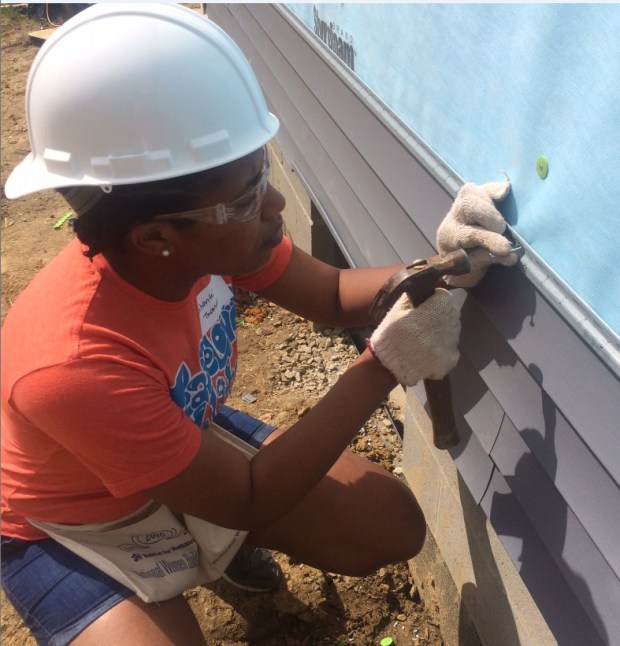
Recently, I experienced partnership in a different way. This month I volunteered my love of helping people realize their goals during the annual Habitat for Humanity Women Build, where I partnered with hundreds of volunteers to build two families’ dream homes.
Each family has a unique journey that brought it to Habitat. However, they all share a desire for homeownership and the stability and security that brings. More than three thousand volunteer hours, $170,000 fund-raised, and two intensive weeks of building later, that dream has been realized.

Partnership: It works with books. It works for people.

Highlighting 3 Elements to Check During Proofreading

Proofreading is one of the final hands-on stages of the publishing process. At proofreading, the manuscript will receive a final read through. According to the University of Chicago Press’s (2010) The Chicago Manual of Style (Sixteenth edition), “Proofreading is the process of reading a text and scrutinizing all its components to find errors and mark them for correction.” All components encompasses more than reading the text. Proofreaders should also the following.

  • Verify the table of contents’ accuracy: One of the first things readers will see (and use) is a book’s table of contents (TOC). If it’s incorrect (for instance, it says chapter 2 begins on page 13 but it actually begins on 31), the author’s and publisher’s credibility will be damaged. Readers may ask, “If these people can’t even get a page number correct, what else have they got wrong?”
  • Double check the spelling of proper nouns: Ideally, this should have been done by the author and editor. Yet, oversights do occur; but they don’t have to occur on the proofreader’s watch. Again, obvious mistakes (like misspelling an author or organization name) damage the author’s and publisher’s credibility.
  • Check the accuracy of section headings and running heads: “Running heads—the headings at the tops of pages—function, like page numbers, as signposts” (University of Chicago Press, 2010). Pages shift or figures, tables, or lists are moved during formatting. When this happens, the running head or section headings may no longer reflect the page’s content.

Happy proofreading!
Reference
The University of Chicago Press. (2010). The Chicago manual of style (16th ed.). Chicago: Author.

Making Decisions: Are Website Screenshots Necessary?

Screenshots are rarely necessary. I’m inclined to say they’re never necessary, but my mother told me that I should never say never so I won’t.

I will say that showing readers images of a site severely dates a book. In my experience, it takes seven to eight months to produce a book through a traditional publishing house. Often, those great screenshots that appear in your January manuscript don’t reflect the site’s interface by September.

Moral of the story: Say no to screenshots.