Coauthoring a Book: 4 Recommendations for a Smooth Publishing Experience

I noticed that quite a number of books that I acquired have multiple authors. Whether they’re longtime business partners penning their first book or previously published authors sharing a byline for the first time, coauthors can do the following to make the process easier on them and the publisher.

  • Have a clear, joint vision for their book: Successful books have a clear audience, message, and cohesive voice. Before submitting their proposals, coauthors should discuss and agree on these elements.
  • Know how they will split royalties: It is not a given that all parties will split royalties equally. If one is contributing more in terms of authorship, research, marketing, or celebrity, it is okay for that person to get a larger percentage of the royalties if coauthors agree. Or coauthors may want all royalties to be paid to a single entity like a charity or institution. Either way, they must notify their acquisitions editor, so she can add the proper designations to the contract.
  • Choose one party to be the primary contact: Especially if there are three or more authors involved, it will make for a more cohesive publishing process for editorial, design, and production if the managing editor or acquisition staff can contact one person to respond to questions or assign tasks. This does not mean all parties can’t be copied on all email correspondence. It is just more time efficient to have one person compiling and then communicating cover design considerations, for example, instead of the publisher receiving multiple emails that may state very different desires. That leads to the next point.
  • Designate collaboration time and assign tasks: Coauthors should create a schedule that gives them time to discuss their writing strategy, promotion and sales information from their publisher, deadlines, and so on. Along those lines, considerations when designating work include asking who will:
    • Solicit or compile endorsements
    • Review the copyedit and respond to editor queries
    • Review page proofs
    • Proofread the draft before sending it to their publisher

This is by no means an exhaustive list but does help coauthors plan for a smooth publishing process.

Naming Your Book

A book’s title is arguably as important as its content. A vague title or one too common runs the risk of being overlooked by retail customers. A title that’s too niche is also unlikely to gain traction.

One must also make sure the book’s title complements the cover art. Simple, short titles look great on covers with little or with tremendous artwork. On the other hand, a long title (think more than seven words) on a 6 x 9 trim book or on a cover that already has a lot of images may look too busy and off-putting, especially as a thumbnail–the size the cover will as on online retailers.

The following are a few questions to consider to get a title that resonates on the market.

• Does the proposed title identify the book’s audience and the book’s goal?

• What key terms will buyers use to search retailer sites or inquire at bookstores about books on the topic?

• What terms are popular among leading competitors?

Authors shouldn’t consider titling their book a solo task. They should consult their publisher, which has access to marketing and sales professionals. The latter know which key words, title, or subtitle will best position the book for success on the market.

Good luck!

Bragging on Yourself, Selling Yourself

Some see humility as a virtue, and I concede there is a time for it. However, that time is never when writing your proposal or pitching yourself to a publisher. When writing your proposal or pitching yourself, you as prospective author should detail:

  • Your expertise—What are your credentials? Have you received any national or international awards or appointments because of your work?
  • Your platform—How many unique views does your website, YouTube channel, or podcast receive each month? How many subscribers do your various social media? How many “shares” do typical posts or Tweets receive?

Brag about yourself! Learn to distinguish yourself early on because you’ll have to do more self-promotion when your book releases.

Preparing to Meet an Acquisition’s Editor

Whether you contact the editor or she prospects you to discuss your book idea, you should bring your A game to the meeting. That is:

  • Be professional—Arrive on time, minimize distractions as much as possible, and be ready to discuss your work and your book idea. Editors often schedule meetings back-to-back so it’s a good use of both parties’ time to quickly communicate your goal, your vision for your book now and for years to come, and why you want to work with that publisher.
  • Ask questions—The meeting is your chance to assess whether the publisher is a good fit for you. One way to do that is to question those parts of the process you’re unclear about and see if the editor responds seriously, sincerely, and to your satisfaction.
  • Be coachable—While you may be a content expert, you likely aren’t an expert on matters such as best marketing practices, consumer buying trends, translation rights, and so on. If an editor tells you that it’s better to include reproducibles or reflection space in your book and bump its trim size to 7” x 10” instead of releasing a book and companion workbook, for example, heed the advice—but don’t shy from asking why. To have a successful working relationship, editors like myself will note how you respond to feedback. Are you engaged and coachable, or do you insist that you know best?
  • Sell yourself and your expertise—Be true to yourself. If you’re an introvert, lean into that. However, you must convince the editor that you are the perfect person to take a chance on—especially if discussing a scholarly or work-for-hire project. A publisher invests a lot of resources into a book, so it wants to know that you’re worth the risk.

Good luck!

Learning from a Publisher’s Rejection

So, you prepared your proposal (summary of your book idea, where you think it’ll fit in the market, your credentials, and all that other requested info) and submitted it for your dream publisher’s consideration. After your painstaking work, an acquisitions editor (the publisher’s representative) rejects it. How do you handle that?

The following are a few suggestions.

  • Recognize the publisher isn’t rejecting you: A rejection is not a personal attack. It reflects the acquisition editor’s assessment that your book does not complement the publisher’s goals at the time. Sending the acquisitions editor a short message thanking him, her, or them for consideration—or not responding at all—is appropriate; do not berate the publisher’s choice or insult the editor.
  • Look for takeaways in the rejection letter: It may be tempting to simply send a rejected proposal to another publisher, but it will be an exercise in futility if you dismiss valuable feedback. Instead, treat it as a learning experience.
    • Did the acquisitions editor tell you that there isn’t a demand for the topic? Consider shelving the book for a time or re-evaluating the project to see if you can expand it to include more relevant themes.
    • Did the acquisitions editor tell you the project reads like a dissertation? Revise it. This usually means that you as the writer must trim the literature review; consolidate footnotes; and foreground your ideas.  
    • Did the publisher tell you they want you to grow your platform? A lot of prospective authors mistakenly believe it’s entirely up to their publishers to create, grow, and sustain their platform. This is untrue. You as prospective authors should create professional websites or social media accounts to promote yourselves; book speaking engagements, seminars, or workshops (even virtually); or perform other relevant tasks to further your brand. A book will complement this work—not replace it. This also shows the publisher that you will be an active partner.

Once you have incorporated this feedback and updated your book proposal to reflect the changes, send the proposal back to that and other publishers in the field. Know that sometimes making these changes takes months or years.

Good luck!  

Identifying 3 Ways Authors Can Promote Their Books

The benefits of a traditional publisher are numerous. Its advertising and merchandizing partnerships are certainly chief among them. That said, all authors—both self-published and traditional—can help promote their own book.

Authors can:

  1. Update their email signatures and bios to include a link to bookseller—Not only does this advertise that they’ve written a book, it also increases the chance of impulse buys.
  2. Tweet, and encourage peers and friends to post, about the book—Even posting a short but meaningful excerpt raises awareness.
  3. Use the book cover as the background photo on social media sites like Twitter or Facebook or personal websites—I’m especially a fan of this strategy for authors who consult or book speaking events. Attendees will inevitably look them up, so putting the book in a prime spot increases the chance that they’ll see and buy it.

A book that’s seen is a book that sells, so authors should pull out their books whenever and wherever possible.

Submitting Your Proposal (for First-timers)!

So you’ve finally written your book and compiled a list of publishers whose audience will love it. But what do you send?

Each publisher has its own guidelines—usually found on its website, but send the following and no detail will be left to chance.

  • Cover letter (or email) summarizing your manuscript, your expertise, other publishers you’re contacting, and any competing titles: Pitch your book. Publishers receive hundreds of submissions, so use this time to set yourself apart. Explain what story you’re telling and why you’re the person to do it. Let them know you know about the competition but that your title makes a distinct contribution
  • Marketing plan communicating how you plan to market your book. After all, publishing is a partnership. Writing a book is a small part of publishing. If you want to get your book into readers’ hands, you’re going to have to work. That means you’ll attend launch parties, book signings, meet and greets, professional development events, and so on. There are millions of books on any topic, so publishers want to know what you’re willing to do to get yours into reader’s hands.
  • A sample containing the introduction, first chapters, and a table of contents. I know some writers are suspicious of sending their work out. However, a commissioning editor needs to accurately access how well you execute your ideas and the quality of your writing. Still, some writers think their idea will be ripped off. When in doubt file for copyright of the text through the U.S. Copyright Office (http://copyright.gov) or mail your mom a copy of the manuscript and tell her not to open it.
  • Resume or curriculum vitae that illustrates your expertise. Academic presses want to know you’re qualified, and trade presses want to see what affiliations you have that could support sales and promotion, for examples.

It’s satisfying to get a confirmation that your submission has been received, but honestly, you may not hear anything for weeks or months depending on how many proposals a publisher receives. Just persevere. Keep sending the package to publishers whose audience you’re writing for.

Good luck!

Working During COVID-19

Like many offices, mine shifted to remote work at the start of the pandemic. That shift is something I’m grateful for and yet, I notice that it creates new challenges. Isolation from coworkers and office resources (printers, mail service, and so on) are chief among them.

The following are ways I’ve been handling this time:

  • Being kind to myself and understanding that business as usual has changed
  • Practicing self-care, which means regular exercise and dog walking to mitigate stress and remain healthy
  • Participating in virtual hangouts to stay connected to my coworkers and other professionals in the field
  • Embracing virtual learning and conferences to stay abreast of industry news and access best practices
  • Being honest with stakeholders like series editors, authors, and colleagues about what challenges—and delays—this time presents

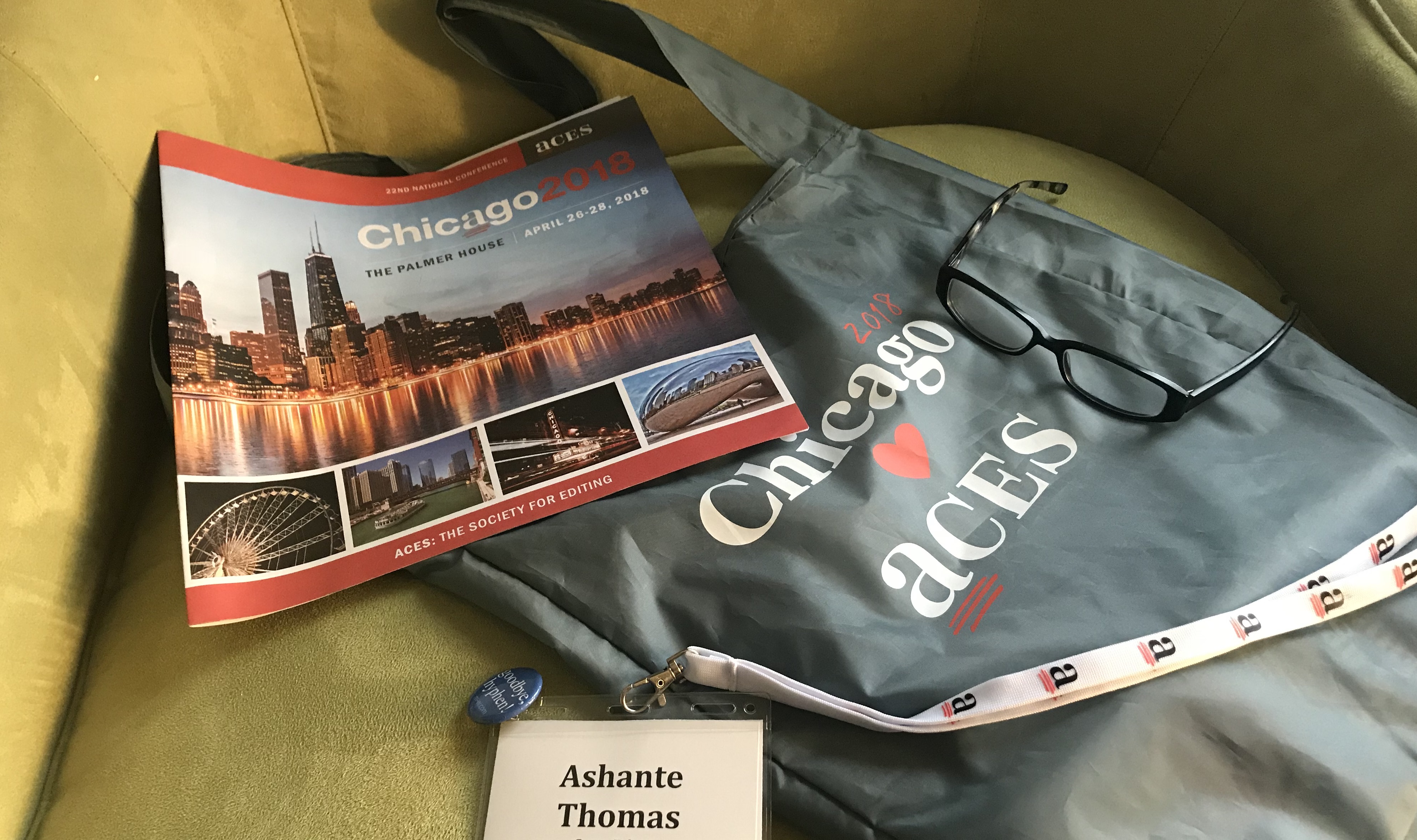
Recounting Four Takeaways From ACES 2018

To keep my copyediting skills sharp, I was off to the 2018 national conference of ACES: The Society for Editing in Chicago, IL. It was a great opportunity to learn new practices in the industry. The following are four lessons I’m taking away from the event.

  1. Language: Understand that we, the people, choose how we use English, which is one reason Merriam-Webster expands and revises its entries annually.
  2. Bias detection: Follow an inclusion checklist that assumes the writer doesn’t understand why a point is offensive yet do push back, requesting supporting research and consulting an expert. Avoid labels, which means scrutinizing whether an identifier like race is relevant. (You can check out more about that “Is This Biased?” from its handouts.)
  3. Workplace: Build social capital with colleagues, which means acknowledging when a staff person does a great job so that one can build from that good foundation to confront on and resolve an issue. Now this session was geared toward workplace leaders, but I think it works in collaborative settings too.
  4. Overall: Don’t give people an excuse to stop reading.

It’s probably a cliché at this point, but I still believe it: the copy editor is often the last line of defense—checking the accuracy of information before it reaches the reader. Every publication from the corporate office to the newsroom needs reliable copy editors—professionals who are the first readers of a writer’s work. These professionals preserve writers’ voice while checking grammar, spelling, and punctuation; reviewing the text structure and flow; and verifying facts. Why do they do that? Because writers, no matter how educated or experienced, immediately lose credibility among readers when they spot errors or are confused by the text. We (copy editors and writers) don’t want to lose our readers; we want our writers’ story to get out.

Conference gear

Laying the Right Foundation (Author Onboarding)

I read a Harvard Business Review article, “Your New Hires Won’t Succeed Unless You Onboard Them Properly,” that highlighted the importance of proper onboarding for talent retention. The writer pointed out that companies that streamline the steps and interactions needed to make a new hire’s first days successful and welcoming see less turnover. In essence, companies that are intentional about laying the right foundation will receive better results.

Likewise, I think project editors have to be intentional about laying the right foundation with authors. When a manuscript transmits, I reach out via email to the author to make introductions. At that time, I briefly recount what the author can expect during the production process, highlight important dates (like editing review and formatting review), confirm those dates work for the author, and ask if the author has questions about any aspect of the process. In my experience, authors feel good about the process when this occurs. For them, the editor becomes a real person, invested in the authors’ work. For me, I learn how responsive a writer is and whether I need to request modifications to a project’s time line before production begins.

Proper onboarding indeed!