Using Your Complimentary Copies—Wisely

Many authors receive free copies of their book at publication, but most don’t know how they can leverage those copies to increase book sales and to draw in new clients. The following are a few ideas:

  • Send signed copies to their network—the decision makers—encouraging them to purchase copies for each staff member if they enjoy the book
  • Send a copy to their top five media contacts and ask to appear on a segment or podcast
  • Raffle a copy of their book to a random winner who joins their mailing list

Authors can also use their author discount to purchase additional copies to accomplish many of these tasks too. The goal is not to give away tons of books for free but to invest in oneself. Putting a signed copy of a new release is a small lift that can have long-term benefits.

Good luck!

Tapping Your Network

You’ve signed with your dream publisher and submitted your manuscript to production. As release day draws closer, you wonder what you can do as author to help sales and publicity. The following are a few tips that involve leveraging your network to drive sales as soon as your book is available for preorder.

> Ask to appear on their podcast—Discuss your expertise and plug your book. You don’t have to sound like a salesperson, but you must understand that you are your book’s biggest cheerleader. It’s even better if the podcast centers on your area of focus because you know that you are in front of the right audience.

> Send an advance copy of the book to your media and industry contacts—Invite them to leave a review, talk about it to their followers, and purchase a copy for their teams.

Continue establishing yourself as a leader in the space—Book consulting and professional learning on the subject. Create future keynote presentations or online offerings on the book’s topic. Remember that while writing for well-known publications like The Atlantic, NPR, or Edutopia will often put you in front of a larger audience, do not dismiss the benefits of posting to popular sites like LinkedIn, Instagram, or TikTok. You should have a modern, easy-to-navigate professional website and social media account.

Refreshing Your Website before Hitting “Send”

Many publishers check prospective authors’ platforms ahead of offering them a publishing agreement. Their goal is to sign authors with a strong platform to mitigate the risk of signing someone who cannot help drive sales of their book. So, the following are two elements that authors should address before sending a publisher their book proposal.

  1. Verify that their website lists their expertise and keynote/consulting topics—Publishers are looking for thought leaders. They want to sign the biggest name or promising emergent names on a topic. They want to see what listed topic or audience is a natural fit for the prospective author’s book. So, outdated information will not help a modern contract.
  2. Remove dead and obsolete links from their website—Broken links look bad! If a page has moved or if authors no longer post to social media sites like Twitter or YouTube, they need to remove links to those sites from their website. It doesn’t matter if the author has 50,000 followers on that page: if prospective authors are not engaging with those followers, they won’t buy the book.

Good luck!

Shifting the Focus of Your Book Post-Contract

Often, books are contracted months or even years ahead of their release. As authors’ platforms and work evolve, they may find that the audience or topic they’re writing to is no longer the largest part of their business. To get the publisher’s support to change directions while keeping the contract terms intact, an author might consider the following:

  • Is the new focus marketable? Is it a buzz topic in the industry or news, ensuring that the book will sell?
  • Is the new primary audience the biggest following or clientele the author has? As I’ve said before (and so has Jeb Blount), people buy you. That means the author must write in their authentic voice and to the audience that they are in front of.
  • Does the publisher have a history of success in the new area? In many cases, the author is not shifting the focus or audience so much that this will be an issue. For instance, a publisher that sells books to teachers will most likely also have a good record with education leaders too.

When making the case to their publisher, authors should also note any new marketing or bulk sales opportunities to strengthen their case. Publishing is a partnership, and both parties must satisfy their objective.

Good luck!

Communicating Your Vision for Your Book’s Cover Design

Cover design is one of the most exciting parts of the book production process. Undoubtedly, both author and publisher understand that a well-designed cover draws in readers, and all parties want to be proud of the end result. However, the author and publisher often have differing ideas of what that design looks like.

For the publisher’s part, it wants something that is engaging, complimentary to its brand, visually appealing in person and online, and compliant with any considerations pertaining to licensing of art and fonts. I suspect most authors want the same but often focus their attention on the look and “vibe “of their cover. So, how can these parties each leave the cover design process satisfied?

I recommend the publisher ask and authors communicate their vision. A meeting, email, or cover questionnaire can easily accomplish this. Along those lines, the author should consider:

  • What competing book covers look like—The author should look online, in industry catalogs, or in brick-and-mortar stores. Note the books that are billed as best-sellers or get prime placement (that is, forward-facing in stores).
  • What “feel” they want—The feel can be fun and accessible, authoritative, or something else.
  • What colors the author envisions—The author should note if he or she wants a cover with vibrate shades like red and orange, soft pastels like sage green or cream, or something else.
  • Fonts—Authors should communicate whether they want the title or author name be bigger than the subtitle, whether the main title be larger than all other text, whether they desire cursive or other special looks.
  • Art—Some authors do not want pictures on their book covers while others are indifferent. Others still, may have strong feelings about certain symbols. I once worked with an author who was vehement that her book on motherhood should not use a cover image that focused on a pregnancy bed. To her, images like that removed the woman’s personhood and centered her only as a reproductive agent. Any author who has strong feelings should communicate that.

If authors don’t know what they want or are open to a variety of designs, they have likely made their designer’s day. Who doesn’t like carte blanche to create a stunning visual!

After authors communicate their cover desires, they should trust their partner—that is, their publisher. Any reputable publisher has years—or centuries—of publishing success under its belt. It won’t want to jeopardize that on a slapdash cover that looks inferior beside competitors.

Submitting Your Proposal (for First-timers)!

So you’ve finally written your book and compiled a list of publishers whose audience will love it. But what do you send?

Each publisher has its own guidelines—usually found on its website, but send the following and no detail will be left to chance.

  • Cover letter (or email) summarizing your manuscript, your expertise, other publishers you’re contacting, and any competing titles: Pitch your book. Publishers receive hundreds of submissions, so use this time to set yourself apart. Explain what story you’re telling and why you’re the person to do it. Let them know you know about the competition but that your title makes a distinct contribution
  • Marketing plan communicating how you plan to market your book. After all, publishing is a partnership. Writing a book is a small part of publishing. If you want to get your book into readers’ hands, you’re going to have to work. That means you’ll attend launch parties, book signings, meet and greets, professional development events, and so on. There are millions of books on any topic, so publishers want to know what you’re willing to do to get yours into reader’s hands.
  • A sample containing the introduction, first chapters, and a table of contents. I know some writers are suspicious of sending their work out. However, a commissioning editor needs to accurately access how well you execute your ideas and the quality of your writing. Still, some writers think their idea will be ripped off. When in doubt file for copyright of the text through the U.S. Copyright Office (http://copyright.gov) or mail your mom a copy of the manuscript and tell her not to open it.
  • Resume or curriculum vitae that illustrates your expertise. Academic presses want to know you’re qualified, and trade presses want to see what affiliations you have that could support sales and promotion, for examples.

It’s satisfying to get a confirmation that your submission has been received, but honestly, you may not hear anything for weeks or months depending on how many proposals a publisher receives. Just persevere. Keep sending the package to publishers whose audience you’re writing for.

Good luck!

Querying Authors: How to Write Queries, When to Write Them

Sometimes it’s necessary to query authors to clarify an idea or concept. In my opinion, the best queries are straightforward, spelling out exactly what information you need. You want to respect the authors’ time and avoid any chance your request can be misinterpreted. Perhaps the authors said “Research says” or “Studies show”, but they don’t cite any of the research they’re drawing from. Lack of research can cause credibility issues. Readers need to be able to pull up the resources being quoted to verify the information for themselves. I’d leave a simple author query (AQ) like [AQ: Please cite the research you’re referring to, and provide a reference-list entry for each citation].

Note the bold font make the query standout from the normal text. I may also highlight it in yellow. This minimizes the chance that the query will be overlooked during the authors’ review. However, some programs like Microsoft Word offer Comment features that are also effective.

The following are the most common issues I (and I imagine other editors) have to query for.

  • Missing information: Author bios, photos, text, and research
  • Clarifying information: Perhaps the author makes an assertion that can be misconstrued. For instance, an author may say “We have to close the achievement gap in the United States. Minorities are earning four-year degrees at lower rates than other groups.” In this case, I need to know how the author defines the term minority. I’ve heard this term used to describe women, but the National Center for Education Statistics reports that women are earning degrees at higher rates than men, which would make the writer’s point inaccurate.
  • Making suggestions: In my field (education publishing), we want to provide educators with practical, research-based strategies and tools. Occasionally, authors will include sample rubrics or lesson plans in manuscripts. I may ask them if they’d like to make the material free to download on their book’s product page. This (1) provides teachers with an easy-to-access tool they can immediately use with their students, which in turn makes them feel grateful toward us and likely to buy our product again; and (2) draws readers to the book’s page where they can find other titles the author has published . . . which they will then buy.

It should go without saying that any queries should be respectful of the authors, their expertise, and the time they devoted to writing. Not only are they doing a service, they chose to work with you, so your dealings with them should demonstrate gratitude for their choice.

Understanding the Power of Partnership

One of the reasons I chose to pursue a career in publishing is that I love helping people achieve their goals. I’d like to say that as a copy editor (and proofreader and project manager), I take a manuscript in its raw form and transform it into a polished piece, marketable to the public and accurately reflecting the author’s voice. However, that transformation can not be achieved without communication with the author and the production team. Behind every traditionally published book, there are editors, designers, sales people, marketing staff, accountants . . . and an author working together to realize the author’s dream. Nothing can be achieved without partnership.Build

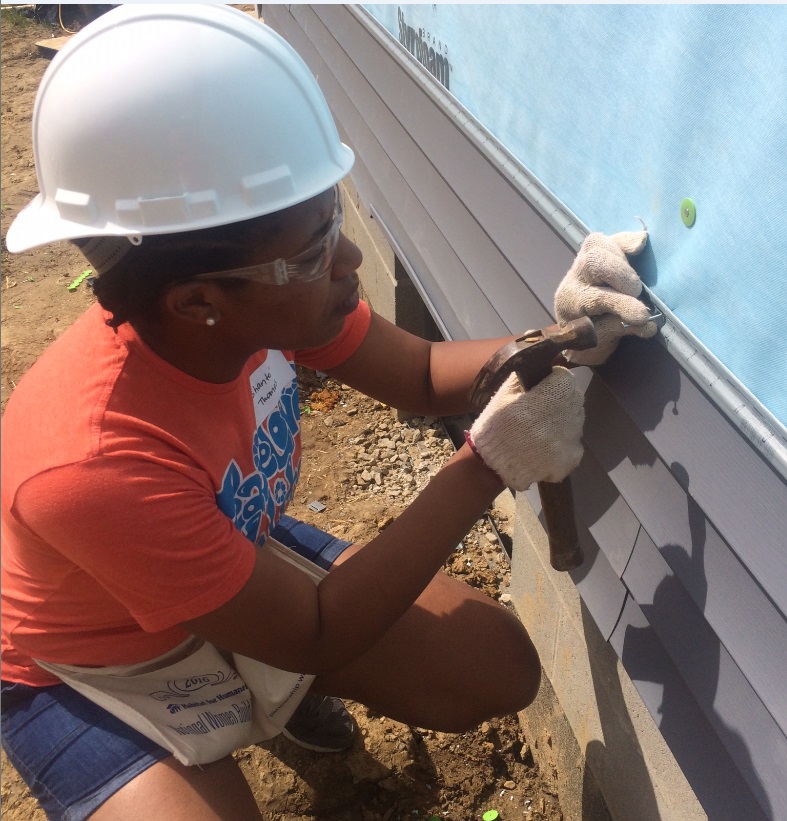
Recently, I experienced partnership in a different way. This month I volunteered my love of helping people realize their goals during the annual Habitat for Humanity Women Build, where I partnered with hundreds of volunteers to build two families’ dream homes.
Each family has a unique journey that brought it to Habitat. However, they all share a desire for homeownership and the stability and security that brings. More than three thousand volunteer hours, $170,000 fund-raised, and two intensive weeks of building later, that dream has been realized.

Partnership: It works with books. It works for people.

Highlighting 3 Elements to Check During Proofreading

Proofreading is one of the final hands-on stages of the publishing process. At proofreading, the manuscript will receive a final read through. According to the University of Chicago Press’s (2010) The Chicago Manual of Style (Sixteenth edition), “Proofreading is the process of reading a text and scrutinizing all its components to find errors and mark them for correction.” All components encompasses more than reading the text. Proofreaders should also the following.

  • Verify the table of contents’ accuracy: One of the first things readers will see (and use) is a book’s table of contents (TOC). If it’s incorrect (for instance, it says chapter 2 begins on page 13 but it actually begins on 31), the author’s and publisher’s credibility will be damaged. Readers may ask, “If these people can’t even get a page number correct, what else have they got wrong?”
  • Double check the spelling of proper nouns: Ideally, this should have been done by the author and editor. Yet, oversights do occur; but they don’t have to occur on the proofreader’s watch. Again, obvious mistakes (like misspelling an author or organization name) damage the author’s and publisher’s credibility.
  • Check the accuracy of section headings and running heads: “Running heads—the headings at the tops of pages—function, like page numbers, as signposts” (University of Chicago Press, 2010). Pages shift or figures, tables, or lists are moved during formatting. When this happens, the running head or section headings may no longer reflect the page’s content.

Happy proofreading!
Reference
The University of Chicago Press. (2010). The Chicago manual of style (16th ed.). Chicago: Author.

Identifying 3 Ways to Locate Copyright Holders

You’re publishing a piece and decide that a text (poem, song lyrics, book quotes longer than 500 words) or visual someone else created would help illustrate your point. You don’t want to include the other party’s work without written permission from that party because (1) you could be sued if she finds out and (2) you’re an honest person who wants to make sure all responsible parties get proper credit. What can you do track down the rights holder?

  1. If the material you want is reprinted in a book, look for the copyright holder on the book’s copyright page. This page usually appears after the title page. Many will list the rights holder at the top after the copyright symbol, ©. Usually, the rights holder’s contact information (or her publisher’s contact information) is on the page.
  2. Visit Copyright Clearance Center (http://www.copyright.com/). At the bottom of its home screen there’s a heading “Get Permissions.” Select “Permissions Search” under that heading and you’ll be taken to a page where you can search for a resource by its title, ISBN, or ISSN. Once you’ve located the work, you can follow the CCC’s directions to request permission to use it.
  3. Do an online search for the name of the work’s creator. If the rights holder is working in the public sector (university professor or state superintendent); you should be able to access a mailing address, email address, or phone number. I’ve also found the White Pages (http://www.whitepages.com) helpful, but I would caution you that it should be a last approach. You could easily locate the wrong John Smith or piss the rights holder off by infringing on his home life.

Happy hunting!